
In 2013, Washington’s first draft rules for legal cannabis banned concentrates. Farmer Tom Lauerman thought that would get people hurt, because the homemade butane hash oil being made in kitchens across the Pacific Northwest was already blowing up houses. So he put the top extractors in the state in front of a TV camera and showed every method, the dangerous one included. In his telling, the state changed its mind within a week. This is that story, as Tom tells it on Unscripted Cannabis, with the public record alongside.
Homemade butane hash oil was blowing up houses
Butane hash oil, or BHO, was a big thing in the Pacific Northwest, and the region is cold and wet, so a lot of it was being made indoors. Tom remembers explosions, fires, people dying and people maimed, with blasts “literally lifting houses off their foundations.”
That matches the record. In January 2014, NPR reported on a Seattle hash oil explosion that pushed a building’s walls about six inches off the foundation, and quoted a Seattle Police bomb squad sergeant saying local fires often started with butane fumes in a freezer.
Tom’s point was how easy it was. A homemade setup cost about a hundred dollars in hardware-store gear. A ban would not stop anyone from buying it.
The first draft rules banned concentrates outright
Tom was spending a lot of time in Olympia while the state wrote the rules for Initiative 502, and he could see where the regulators were heading. They thought concentrates meant only BHO, and their answer was to make all of it illegal.
The draft bears that out. In May 2013, NW News Network reported that the Liquor Control Board’s proposed rules were “a ban on hash and other forms of concentrated THC extracted from marijuana plants,” unless the extract was infused into a product.
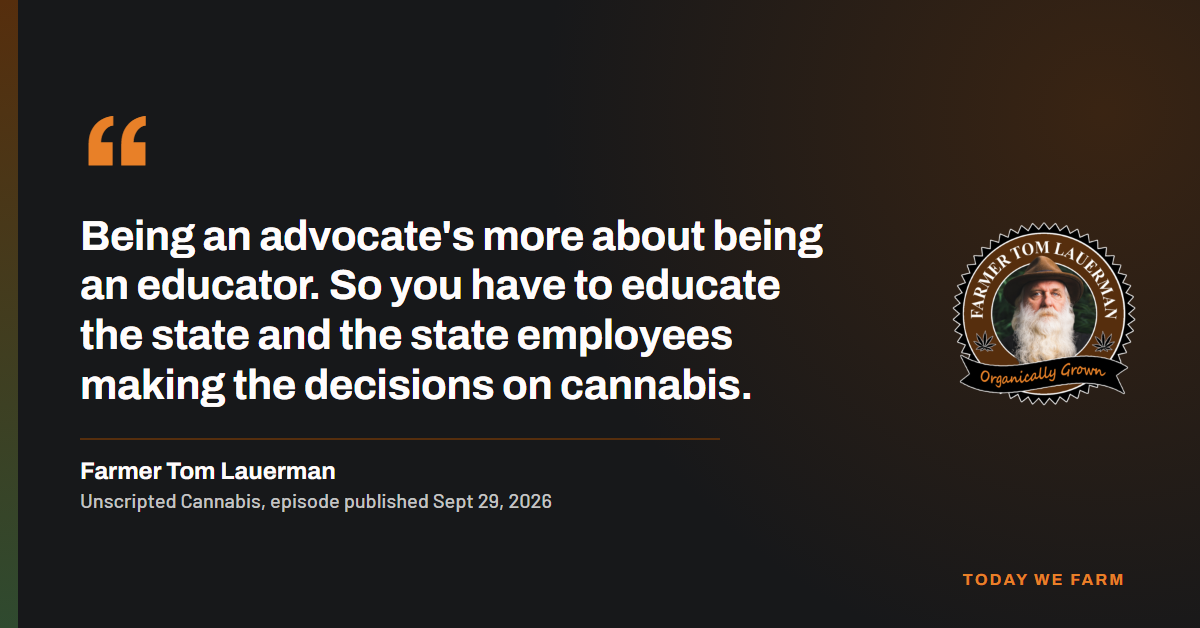
Being an advocate’s more about being an educator. So you have to educate the state and the state employees making the decisions on cannabis.
Farmer Tom Lauerman on Unscripted Cannabis, 2026.
Tom showed the state every way to make a concentrate
Matt Markovich of KOMO News, the Seattle station that often called on Tom, asked if he would do an open blast on camera. Tom said yes, and made it bigger. He brought together the top people in the extraction world and walked through all of it:
- An open blast, done outside under a tarp, the way it has to be done if it is done at all
- A closed-loop system, run inside as a live demo
- Solventless methods: bubble hash and water hash
- RSO and CO2 extraction
The message was one line long. In Tom’s words: “If you don’t regulate [and tax], people are gonna continue to blow themselves up.” A legal market with real equipment and rules was safer than a ban that pushed the work back into kitchens.

Within a week, the state changed course
“Within a week they changed their minds and redid everything and made concentrates legal,” Tom says. That is his account of the timing. The record shows where it landed: under Washington law, only a cannabis processor licensed by the Liquor and Cannabis Board may use butane or other explosive gases to extract resin, according to a 2017 House bill report. Extraction became a licensed, inspected job instead of a banned one.
Being an advocate means being an educator
Tom tells this story to make a point about advocacy. The people writing the rules were not hostile. They did not know what a concentrate was, so they reached for the answer that sounded safest. The fix was to show them.
The demos also opened the next door. The attention brought a call from the union, which led to the 2015 NIOSH study on Tom’s farm, where CDC scientists who had been learning about cannabis from YouTube watched a real harvest.
The same approach runs through Tom’s work today: policy advocacy and government relations, including the 600-foot buffer San Diego County adopted on his recommendation, and expert witness testimony built on decades of growing. If your agency, county or company is deciding how to handle cannabis, contact Tom.
Hear Tom tell it
The concentrates fight is one chapter in a story that runs from a 1999 raid on a San Diego collective to teaching the CDC. Hear the whole thing on Unscripted Cannabis.
Leave a Reply