
In 2015, the CDC knew so little about cannabis farming that its scientists were learning from YouTube. Farmer Tom Lauerman found that out on a phone call, and two visits later, NIOSH had studied a working cannabis harvest on his farm in Vancouver, Washington. This is that story, as Tom tells it on Unscripted Cannabis, with the published record alongside.
The CDC was learning about cannabis from YouTube
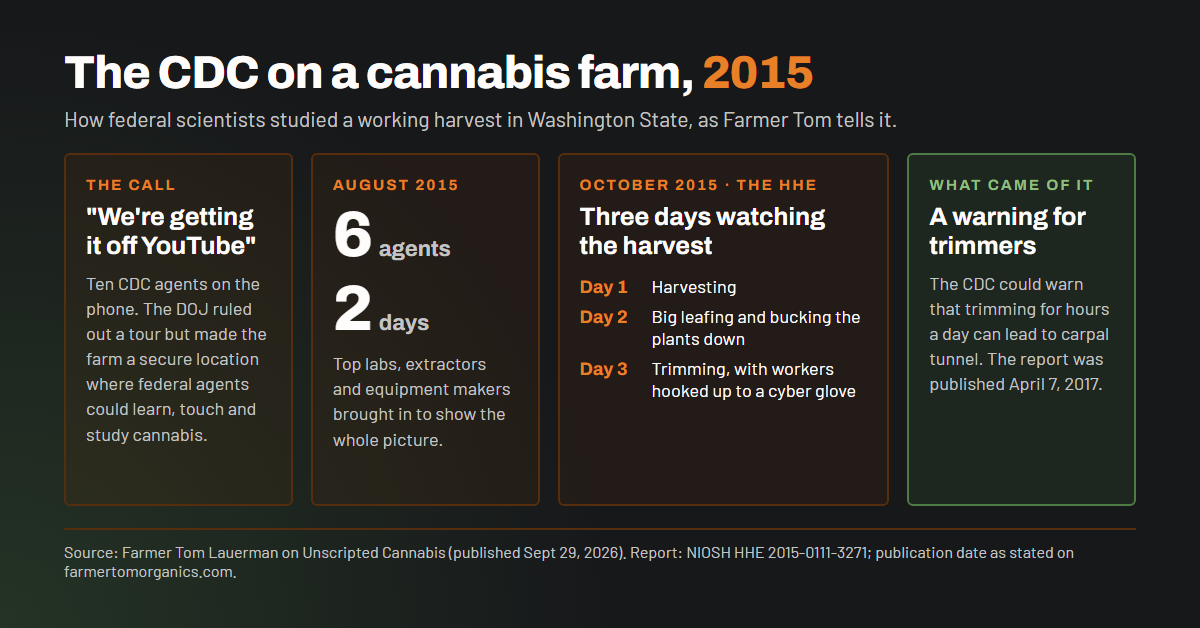
The call came through the union. After Tom ran live extraction demos for KOMO News while Washington was deciding how to regulate concentrates, union representatives asked if he would work with federal scientists on a health hazard evaluation (HHE). Tom got on the phone with 10 agents from the CDC.
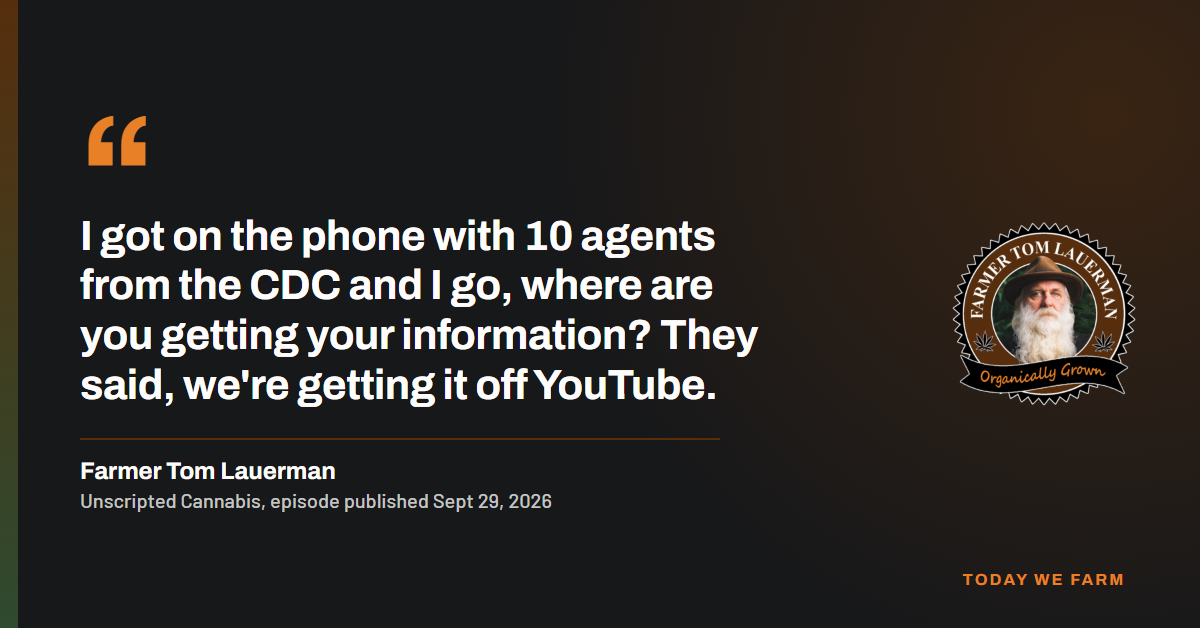
His answer was to show them. “Why don’t I set up a tour?” he offered.
The DOJ said no tour, so the farm became a secure location
A tour was off the table. What the DOJ and the lawyers allowed instead was bigger: they made Tom’s farm, in his words, “a secure location where federal agents can learn, touch, and study cannabis.” Tom was running two collectives on the farm with over a hundred plants at the time. “Everybody thought I was going to jail,” he says.
August 2015: six agents, two days, the whole industry
Six CDC agents came to the farm for two days. Tom decided that if they wanted to know what happens on a cannabis farm, they would see all of it. He brought in the top labs, the top extractors and the top equipment producers.
The scientists also saw cannabis consumed. Tom and his crew rolled joints and did dabs in front of them and took them out to dinner. These days a lot of that same oil ends up in a cartridge on a pen from shops like Discount Vape Pen. His point was simple: this is cannabis, not meth or fentanyl, and people have used it for as long as the plant has been around.
October 2015: three days watching a harvest
The agents came back in October for the HHE itself, timed to watch Tom harvest his crop. The study ran three days:
- Day 1: harvesting
- Day 2: big leafing and bucking the plants down
- Day 3: trimming, with the trimmers hooked up to a cyber glove
The Lund Report counted about 10 officials on that second visit and quoted NIOSH investigator James Couch: the first visit “was our first foray into the cannabis industry.”
What it changed: a warning for cannabis trimmers
The glove data gave the CDC something it could act on. In Tom’s words, the agency could now warn trimmers that “you could get carpal tunnel from trimming hours and hours and hours a day.”
The report, NIOSH HHE 2015-0111-3271, was published April 7, 2017. The Lund Report’s coverage lists the practical fixes: rotate hand trimmers to other jobs more often, keep scissors clean so they take less force, and hang the hook line low enough that hands stay below shoulder height. Read the full HHE report (PDF).
Tom still talks to the scientists. “They’re civil servants. They’re doing the work. They’re just regular people,” he says. Last year, his friend James told him the team refers to him as “Farmer Tom, the seed that started it all.”
Hear Tom tell it
The study is one chapter of a 30-year story that starts with a 1999 raid on a San Diego collective. Today the same SOPs back Tom’s expert witness work and his farm safety consulting. The short version lives on Government Collaboration.
Leave a Reply